

Cooooountry roaaaaaads take me hooooooome to the place I beeeeeelooooong…
That’s right, this article is going to take us to historic Wheeling, West Virginia. So, grab your stogie and saddle up ol’ Paint. We’re heading out for a ride.
This story starts in 1840. We see a young man aged 22, by the name Mifflin M. Marsh. He wandered through the Wheeling Wharf area with a wicker basket in his arm. Marsh sold his home rolled cigars, made of cheap Kentuckian tobacco, to anyone who needed an inexpensive, effective smoke. His customers ranged from wagoners to river boat passengers, dockworkers, crews, and even captains.
The price? Four for a penny. (About $0.37 today with inflation.)
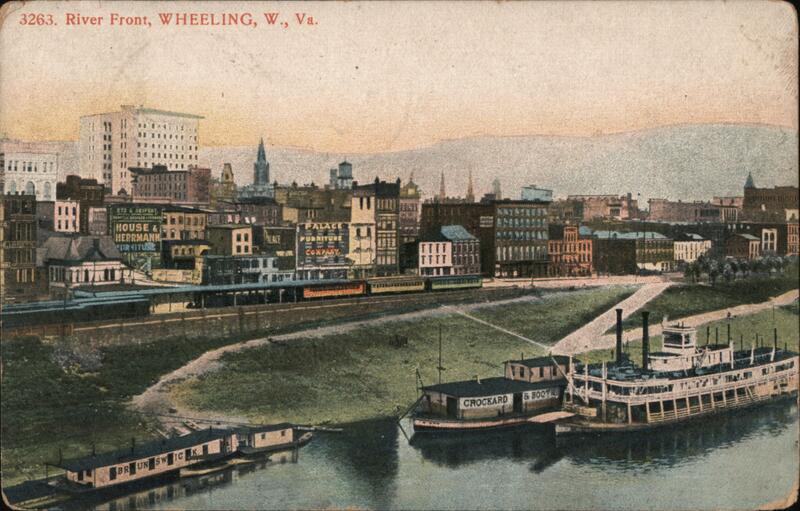
How did cigars become synonymous with the term stogie? Heavy boots were worn by the wagoners of Conestoga wagons. These wagoners would tuck their long, thin, and inexpensive cigars into the boots named for the Conestoga: stogies. These wagons would travel right through Wheeling on the national road (’round those parts now known as Route 40).
You can bet that Mr. Marsh made sure every wagoner had smokes on board for the dusty days ahead.
In 1869, Stogie Makers became the first organized trade union in the city of Wheeling. In the same year, Mifflin went into business with his son William Marsh. As a result, M. Marsh & Son was founded
On Jan 13th, 1901, the founder Mifflin M. Marsh passed away in his home, leaving M. Marsh & Son to his son (and business partner) William. As folks around the United States mourned his loss, they began printing his obituary and stories of his legacy.
A factory opened on 913 Market Street in 1908.
In 1920, base operations were moved to 915 Market Street.
William Marsh remained with M. Marsh & Son until his death in 1921.
In the 1930’s with the great depression looming–and industrial advancements–Marsh Wheeling’s Workman’s Stogie were still being hand rolled. In 1931 M. Marsh & Son purchased over 40 cigar-rolling machines. That increased production from 1,000 per day cigars to over 5,000 per day.
The workers who had been hand rolling the cigars weren’t happy about this decision. So much so that shortly after the machines were put in, the unionized workers went on strike.
The strike was short lived, however. The company began hiring female employees, who worked for a lower wage. It turned out they were actually adept at the machine work. An early account from one of the employees at that time revealed the nimble nature of her fingers. She had developed the skills due to sewing and knitting.
The company enlarged operations in 1940. They purchased a neighboring building to keep up with creating the millions of cigars they were making through the 1940s.
Both of the tall, brick factories are still standing as they originally were. The painted advertisements are now faded. You can just make out the word stogie on one, painted upon the now aging brick. The workplaces employed hundreds of men and women. They once crafted stogies that were enjoyed by cigar smokers around the nation. Maybe even the world.
Sadly, that factory closed its doors. It began production in Frankfurt, Indiana, under National Cigar Company in 2001. The company closed in 2016 for good.
For good…until.
Thankfully, Topper Cigar purchased the original blend and began manufacturing around 2018 to keep this historic stogie on the market.
Want to know some famous devotees of this simple smoke? There have been plenty. Abraham Lincoln was no stranger to a simple Workman’s Stogie cigar. During his time in office, he was well known to carry a “cheaper cigar” in hand.
Annie Oakley, John Wayne, Mark Twain, Ulysses Grant, and P.T. Barnum were also fans. Barnum’s “General” Tom Thumb–it has been said–began smoking daily cigars at the age of seven. Probably this very brand.
Mark Twain was known as the Man of 40 Cigars a Day. In his autobiography, he said:
“Then once more, changed off so that I might acquire the subtler flavor of the [Marsh] Wheeling Toby.”
He discovered that the so-called worst cigars were the best for him, after all.
Today, the cigars are manufactured in the Dominican Republican by Topper Cigar and are sold for around $2.00 a smoke. Are they the best cigar? No. But every time you unwrap one from its cellophane, and take a puff, you are puffing on history.
Now, you have a story to tell around the fire pit with your friends. You can share how the term stogie was born in a bustling river town named Wheeling, West Virginia.
 Quack Pack Tabac